One of the lesser-known causes of sudden cardiac arrest is Long QT Syndrome, a rare congenital heart condition. People with Long QT Syndrome – estimates range from 1 in 3,000 to 1 in 10,000 of the healthy population – are vulnerable to arrhythmias (rapid, irregular heart rhythms) that can deteriorate into ventricular fibrillation and sudden cardiac arrest. Last spring, U.S. hockey player Steven Konowalchuk retired from the game after a routine medical exam revealed that he had Long QT Syndrome.
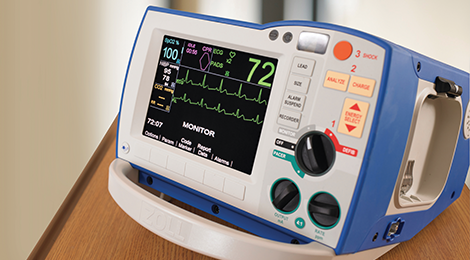
A recent paper on diagnosis and treatment of Long QT Syndrome provides a valuable overview of the disease. Long QT Syndrome shows up on ECGs as an unusually long distance between the Q point (on the Q wave corresponding to ventricular depolarization) and the end of the T wave that corresponds with ventricular repolarization. But for about 10 percent of people with Long QT Syndrome, the condition is not apparent on an ECG / EKG until after is triggered by certain drugs.
Research has linked Long QT Syndrome to genetic mutation on one of several genes, and it is also caused by congenital heart defects. A number of therapies are used to prevent arrhythmias, including beta blockers, potassium supplements, sodium channel blockers, pacemakers, and implantable carioverster defibrillators. Long QT Syndrome is also associated with the use of certain drugs, including the antibiotic erythromycin.
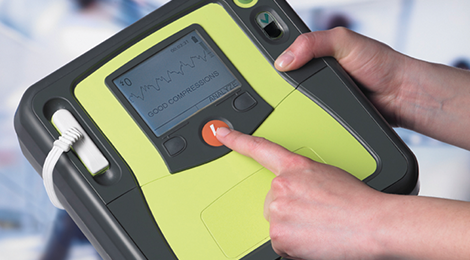
The most common symptoms of Long QT Syndrome are fainting spells (referred to as syncope), often triggered by exercise or emotional stress, and seizures, which can be mistaken for epilepsy. If a Long QT Syndrome arrhythmia progresses to sudden cardiac arrest, the only known treatment is prompt shock from an automated external defibrillator (AED).
Last 5 posts
- Cardiac stress testing: Selecting the right stress test - December 22nd, 2010
- Bedside diagnostic test for Long QT Syndrome - July 1st, 2010
- ECGs for athletes: Benefits may outweigh the costs - March 4th, 2010
- “The Emerging Role of Exercise Testing and Stress Echocardiography in Valvular Heart Disease” - January 27th, 2010
- Healthcare reform bill passes Senate Finance Committee - October 14th, 2009


January 3rd, 2009 at 1:08 am
Unfortunately, I lost my precious, 22 year old daughter, Emilie, to Long QT Syndrome. She was a textbook picture of Long QT, but unfortunately it was not diagnosed during her life. She died suddenly, and without warning in her sleep. Genetic testing of the four surviving immediate family members proved that we actually had two Long QT genes, one from myself, and one from my husband.
The disturbing thing to me is that this diagnosis continues to be missed in the medical community. Sometimes families are mistakenly diagnosed with “seizure disorders” when the cause of their “seizures” is the lack of oxygen to the brain caused by a cardiac problem. Some children are mistakenly being diagnosed with “exercise-induced” asthma. Fainting is not “normal” in a child, and should be thoroughly investigated by a qualified pediatric cardiologist. ECGs when taken, should be read and the QT interval measured by a qualified pediatric cardiologist or pediatric electrophysiologist (EP) doctor. Ideally it should be an EP that has taken care of other QT families when Long QT Syndrome is diagnosed.
The families need to be instructed after diagnosis of congenital Long QT, that certain drugs can increase their chances of going into an irregularly fast heart beat–known as torsade de pointes. Care must be taken that these same people don’t get epinephrine if given a local anesthetic for sutures when injured or biopsies, etc. Also at the dentist office something like Carbocaine should be used, which has less of a cardiac affect than the normal local anesthetic that is usually used. Care should be taken for these patients not to get dehydrated or do any other activity that could cause a profound electrolyte imbalance.
Long QT is an extremely treatable condition. It is so sad that we are continuing to lose so many children and young adults to this condition.
Long QT is probably the second most common cause of sudden cardiac arrest (SCA) in children and young adults, next to hypertrophic cardiomyopathy (HCM) which is the #1 cause of SCA in children and young adults.
A current listing of drugs that can affect the QT interval is maintained at the Critical Path Institute in Tucson, AZ and can be found at their web site at:
http://www.qtdrugs.org
January 3rd, 2009 at 2:57 pm
Christine,
I’m so sorry to hear about your loss. But thank you for sharing your story and educating our readers. It is a generous way to honor Emilie’s memory.
Joe Hage
Director of Marketing Communications
Cardiac Science
June 16th, 2009 at 7:28 am
My 10 year old son died suddenly 9 weeks ago. Autopsy reports on not completed at this point, but the Doctors are suspecting Long QT Syndrome. He was a picture of health, with no symptoms prior to his sudden tragic death. His medical history was very uneventful, other than having his tonsils out in 2005. Upon requesting his records from his tonsil surgery, we discovered that on his pre-op EKG, “Pronlong QT” was indicated on the EKG slip. We are in shock that this was indicated 4 years ago and we were not notified of this. We are left wondering if the loss of our precious little boy could have been prevented.
June 16th, 2009 at 4:45 pm
Susanne,
How tragic.
We’re hoping conversations like ours can educate our readers about the syndrome and other indications to research.
My deepest sympathy for you and your family.
Joe Hage
June 25th, 2009 at 1:27 pm
Hello
First I wish to say I am sorry to you both for your terrible losses.
My heart goes out to you and families.
It is wonderful that you can share your experiences to try educate others and maybe
Save other lives.
I am a mother who has already lost a newborn baby they say due to lack of oxygen at birth. He died at 6.5 hrs very suddenly.
My problem now is my 2yr 8month daughter has recently started
with breath holding spells says the dr.
However she doesn’t hold her breath.
Seems to be when gets fright or sudden injury.
Eyes roll back, goes limp, lose consciousness and remains pale for some time.
Also sleepy after.
Since losing matt which was so unexpected I don’t feel comfortable when dr shrugs off
When I ask about doing ecg saying it can’t be heart. Just bhs.
What is the chance of such a young child presenting long qt syndrome or
Am I just over reacting as a paranoid mother.
I can’t imagine losing another child.
A can’t stop researching worried mom.
Thanks.
June 25th, 2009 at 9:29 pm
I also forgot to mention that she stops breathing very quickly after the incident of sudden injury or fright.
Thank you
Leial
July 1st, 2009 at 9:13 am
Leial, I am truly sorry about your newborn and, yes, I hear your anxiety about your daughter.
Unfortunately, I’m not licensed to dispense any medical advice on the Web site. I will, however, say that it may be worthwhile from a peace of mind standpoint to go ahead and get a baseline ECG test done.
My best wishes for you and your family,
Blaine Krusor
October 5th, 2009 at 7:52 am
Hello,
I’m also sorry for the loss of these children and I feel that doctors should advise the parents if there is any possible issue with the childs well being. I’m very sceptical about the level of care that is offered and as a parent you must fight for your childs well being and ask several questions. I’m so angered right now because I found out that my daughter may have long qt syndrom and will be doing more testing but it seems that it’s all not serious in the eyes of the doctors. She could go and I feel the don’t care what happens it’s just another patient nothing special so what mentality. They actually argued with me when I tried to name out her symptoms and when I asked for another ecg be done they said why? Her level is boarderline at 470-480 according to the doctor and we will be doing a stress test today. But I feel that if she’s running over the 440 norm and even though not at the 490 high 470 is still something they should really look at. The more I read about long qt the more worried I’m getting I’m thankful that she’s had signs now and I feel that it’s not a good practice that they the medical staff do not look into these issues prior to when some child dies. It should be done in a random physical I feel every child should have an ecg just to check at least once around 9 or so. Why wait till it’s too late why does it seem that the doctors are more about saving the insurance cost down? I’m just so frustrated and angry all due to the attention my daughter’s been given. If anyone knows of a great cardiologist in the Seattle area please let me know. I would greatly appreciate it. I’m angry that when I asked the docs to check her out a few years back they said she’s too young to have any issues. That she’s healthy no reason why to check. I’m tired of this mentality, there should be more care and preventative checks now.
Thanks for reading my frustrations and please let me know if you know anything about boarderline readings. I would like to know if she’s still in danger and what I should do next. I have great medical through my work just trying to find a caring doctor.
Best regards,
Sylvia
October 5th, 2009 at 7:56 am
so sorry about the grammar issues I’m late for a meeting and was just very frustrated while typing this. I’m just frustrated that I want my son checked now but they also say he’s healthy why check or do an ECG, but it’s only a couple of minutes not a severe test so I don’t understand the issues but I do know I’m changing family doctors today.
October 20th, 2009 at 5:26 pm
Check out the mayo clinic. My niece has all the symptoms she lives in Ireland and the waiting list to be tested is six months to one year. Her doctors are going to consult with the mayo clinic online services
October 20th, 2009 at 8:05 pm
@Sylvia, thank you for sharing your frustrations. I wish I had something helpful to add.
@Eleanor, if you’d like to check back in after the consult, we’d like to know what you find out.
November 5th, 2009 at 1:26 pm
My daughter is 12 and the initial EKG put her at borderline long QT…..or whatever it’s called. We just found out about this yesterday.
She’s normally a very active child but has been severly fatigued lately especially during practices. Her pediatrician set an appt up with a cardiologist next week.
My question is for Sylvia…..what were your borderline child’s symptoms? Also, I’m interested in an update.
Thanks.
November 5th, 2009 at 1:37 pm
I sent Sylvia an email. I hope she leaves a reply.
My best wishes for your daughter, Tracy.
November 9th, 2009 at 9:50 am
Hello Tracy,
It’s good that they are testing for Long QT now since your daughter is 12 and not older. I hate to scare you but it’s been one of those silent killers many times patients do not know until it’s too late. The best web site I found that gave details on Long QT has been: http://www.qtsyndrome.ch/faq.html
This site will answer several of your questions. The only thing is when it’s boarderline, then there seems to not be so many answers. It seems the doctors know how to handle Long QT but not when it’s boarderline I’m still waiting for my answers. My daughter currently is wearing a monitor for a month to see how her EKG runs if there are any more irregular beats. Her QT runs at 470 and 440 is the norm with 490 being high so not sure what the next step will be for us. They did a stress test and I guess her number should have went higher which would be bad but instead it lowered so we’re still in the test phase. But as for her signs the reason why I took her to the ER was she had a weird fainting spell after her heart raced for a few minutes. They did an EKG and she had an abnormal reading so this is what started this whole deal for us. But I would check out that web site I mentioned it gives a ton of details that may be helpful. Good Luck and let me know your updates as well. Have a great day!
Best Regards,
Sylvia
November 9th, 2009 at 3:31 pm
I am so sorry to all of your who have expereinced such tragic loss.
Leial de Wet,
I am so sorry about Matt and no you are not being a paranoid mother. I urge your to contact a pediatric electrophysiologist trust your gut feeling and get your daughter tested. My daughter was misdiagnosed as a baby/toddler as breath holding and I too knew she wasnt holding her breath, it usually happened when she was upset about something, come to find out our family has both Brugada and Long QT, she was misdiagnosed for 9 years until a ep familiar with ion channelopathies finally read her ekg correctly and saw the Brugada that they missed. It has all been confirmed with genetic testing and she is now protected with an ICD. One thing I want to add is that one ecg/ekg is not enough, they can be variable, when doctors poured over my daughters ekgs from a 10 year span some of them were very obvious and others didnt even show it.
Best to all of you.
November 9th, 2009 at 3:35 pm
@Cyn and everyone, thank you for such a rich dialogue here. I’m certain you are making a difference for a parent anxious to learn about long QT.
Thank you for sharing.
June 8th, 2010 at 7:25 pm
I AM 13 YEARS OLD AND HAV SUFFERED FROM LONG QT. THEY RECENTLY PUT IN A PACE MAKER BUT IVE HAD TWO SEIZURS SCINCE THE PROCEDURE! THE PACEMAKER NEVER DID SHOCK ME. IM STARTING TO WONDER IF MY PARENTS SHOULD HAVE LET THE DOCTORS PUT IT IN.
September 25th, 2010 at 8:48 am
Kyla, I’m not licensed to comment whether putting in a pacemaker was the “right” thing to do. I will suggest, however, that not every cardiac arrhythmia would trigger a shock from a pacemaker.